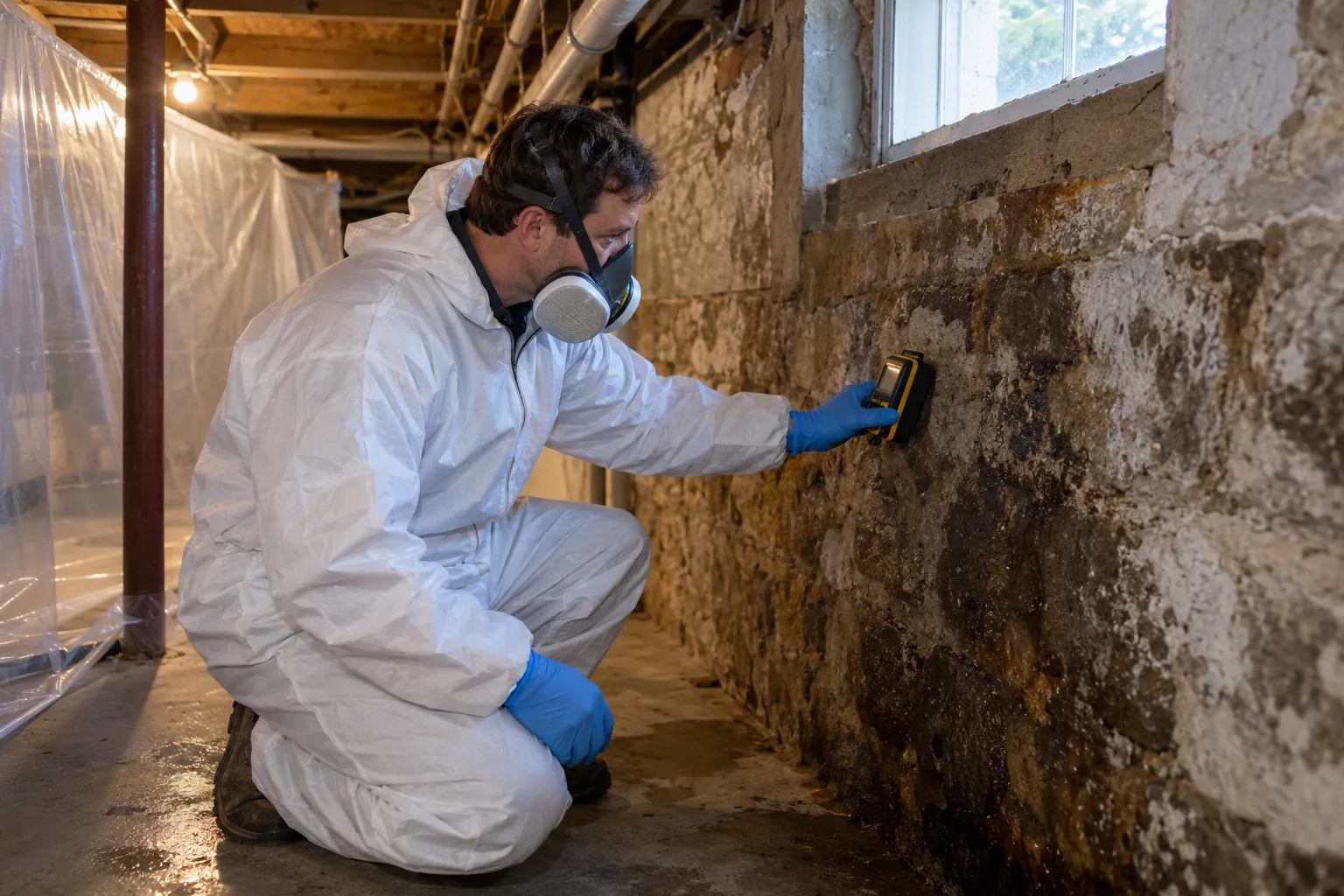
Mold Remediation for Homes in Alexandria
Request an estimate from a local provider
A lot of people think mold is a stain you can wipe off. In practice, the part you can see is often the smallest part. Mold remediation is the full job: locating the moisture, sealing off the area, removing affected material and drying the space so the problem does not return.
Veteranproduct Mold Help is a referral service. We do not do the work ourselves. We connect homeowners across the Alexandria area with independent providers who handle residential mold removal and black mold remediation. This page walks through what to do first, what the work includes, what it typically costs, and how older houses change the picture. Take your time and read it through.
Breathe, then begin: your first hour
Mold is a problem to solve, not a reason to panic. Here is a calm order of steps.
- If a pipe, appliance or roof is actively leaking, stop the water when you can do it safely.
- Close the door to the affected room. Turn off fans that could push spores through the house.
- Do not scrub, sand or spray the patch. That can spread spores.
- Take dated photos of what you see. They help later.
- Keep children, pets and anyone with breathing trouble away from the area.
Then request a callback to check provider availability in your area. Many providers can respond quickly, though availability varies.
Myth versus reality: bleach does not finish the job
A lot of people think a spray of bleach ends a mold problem. In practice, bleach mostly lightens the surface. Drywall, wood and insulation are porous, so the roots and moisture sit deeper. The color fades, and the growth often returns within weeks.
Proper remediation removes the damaged material and cleans what can be saved. It also deals with the damp that fed the mold in the first place.
Why waiting makes it harder
Mold needs moisture, a food source and time. Humid summers give it plenty of all three. A small patch behind a vanity can spread through a wall cavity before you notice a smell.
Porous items like carpet padding, ceiling tile and insulation are often too far gone once growth is heavy. Acting early keeps the work smaller. It also keeps more of your home intact.
What mold remediation includes
The exact plan depends on the home, but most jobs follow a similar path.
- A walk-through to see how far the damp and growth have spread
- A written scope of work and a containment plan
- Sealing off the area and filtering the air
- Careful removal of materials that cannot be cleaned
- HEPA vacuuming and cleaning of surfaces that can stay
- Drying until moisture readings are back to normal
- A final check before the area is rebuilt or closed up
Rebuilding, such as new drywall and paint, is sometimes a separate step. Ask each provider what is and is not included.
Why containment matters
A common belief is that opening windows and running a fan helps. Often it does the opposite. Disturbed mold releases spores, and a fan can carry them into clean rooms.
Providers use plastic barriers and air scrubbers. Many also use negative air pressure, which keeps airflow moving toward the work zone instead of out of it. This is what keeps a basement job from becoming a whole-house job.
Fix the water first
Removing mold without fixing the moisture is like mopping with the tap running. Common sources in this region include:
- Basement seepage after nor'easters and heavy rain
- Condensation on cold pipes and walls in humid summers
- Roof or flashing leaks that show up after winter ice
- Slow drips from old supply and drain lines
A good provider will point out the source or tell you which trade to bring in. Plumbers, roofers and waterproofing crews often work alongside remediation.
Older home, hidden surprises
Colonial and split-level houses, and rowhouses in older neighborhoods, have a lot of history inside the walls. Aging cast-iron and galvanized pipes can corrode and weep for years. Past repairs may hide a patched wall under fresh paint. Plaster, lath and old insulation can hold damp longer than modern materials.
Myth: if the wall looks fine, it is fine. Reality: older houses often hide the problem behind a good-looking finish.
Older materials may also contain things like asbestos or lead paint. A careful provider will ask about the age of the house and check before disturbing anything. Mention any past leaks or repairs you know about. That history saves time.
Working with your insurance
Some policies may cover sudden damage, such as a burst pipe. Slow leaks and long-term seepage are often treated differently. Read your policy and ask your insurer directly before you assume anything.
Providers can often help document damage for a claim. Your photos, dates and written scope of work all help.
Choosing a remediation provider
If you searched mold inspection near me, you may have found plenty of options. Here is how to compare them.
- Ask for a written scope and quote that lists what is included.
- Ask how the provider contains the area and handles waste.
- Ask about the licenses, insurance and certifications the provider holds, and check them yourself.
- If testing is part of the plan, ask who performs it and what training they have for certified mold testing.
- Be cautious if someone skips the moisture source or promises a quick spray-and-done fix.
Get more than one quote when you can. Prices and methods vary.
After the work is done
Keep indoor humidity around 30 to 50 percent. Run a dehumidifier in the basement during summer. Clean gutters, check downspouts and look at the basement after big storms. Use bath and kitchen fans, and keep stored boxes off the floor.
A final check or clearance test can confirm the area is ready. Your provider can explain which one fits your job.
What's Included
Moisture and Damage Assessment
A provider traces where the damp came from and how far the growth has spread.
Sealed Work Area
Plastic barriers and filtered air keep spores from drifting into the rest of your home.
Careful Material Removal
Damaged drywall, insulation or padding is removed and bagged. Salvageable surfaces get cleaned.
Drying and Final Check
The space is dried and checked so repairs can begin on solid, dry material.
Typical Mold Remediation Costs
Costs depend on the size of the area, the materials involved and how hard the space is to reach. These are typical U.S. ranges only. Always ask for a written quote for your own home.
| Item | Typical range | Notes |
|---|---|---|
| Small area (a few square feet) | $500 – $1,500 | Often one wall section or a bathroom corner |
| Single room | $1,500 – $4,000 | Higher if drywall or flooring must be replaced |
| Basement, partial | $3,000 – $7,000 | Depends on access, moisture and finish level |
| Whole-house or large job | $10,000 – $30,000 | Wide spread, HVAC involvement or hidden cavities |
| Fixing the moisture source | $300 – $5,000 | A drip repair costs far less than waterproofing |
| Post-work clearance testing | $300 – $1,000 | Varies by home size and number of samples |
How It Works
Stop the Water
If it is safe, shut off the leak and keep the affected room closed off.
Document What You See
Take dated photos and note any past leaks or repairs in that part of the house.
Request an Estimate
Ask a local provider for a written scope, quote and containment plan.
Dry, Remove, Recheck
The provider removes damage, dries the space and confirms it is ready for repairs.
Why Call Veteranproduct Mold Help
Plain Answers
We explain common mold myths in simple words so you can decide what to do next.
Older-Home Focus
We pay close attention to aging pipes, past repairs and hidden damp in older houses.
Independent Providers
Local providers do the work. Veteranproduct Mold Help simply helps you reach them.
Calm Guidance
Clear first steps help you stay steady and avoid costly mistakes.
Other Services
Need mold remediation in Alexandria?
Found something that looks like mold? Send a request through the form or email contact@veteranproduct.garden, and a local provider in our network can follow up.
Mold Remediation FAQ
Can I remove mold myself with bleach?
Bleach mostly lightens the surface and does little for mold inside porous materials. Scrubbing can also spread spores. For anything larger than a small patch, ask a local provider for a written quote.
How long does mold remediation take?
Small jobs may take a few days. Larger jobs, especially those with drying and rebuilding, can take a week or more. The timeline depends on the size of the area and how wet the materials are.
Does homeowners insurance cover mold remediation?
Some policies may cover mold that follows sudden damage, like a burst pipe. Long-term leaks are often treated differently. Check your policy and ask your insurer, because providers can often help document damage for a claim.
Reach a local provider
Found something that looks like mold? Send a request through the form or email contact@veteranproduct.garden, and a local provider in our network can follow up.
No obligation